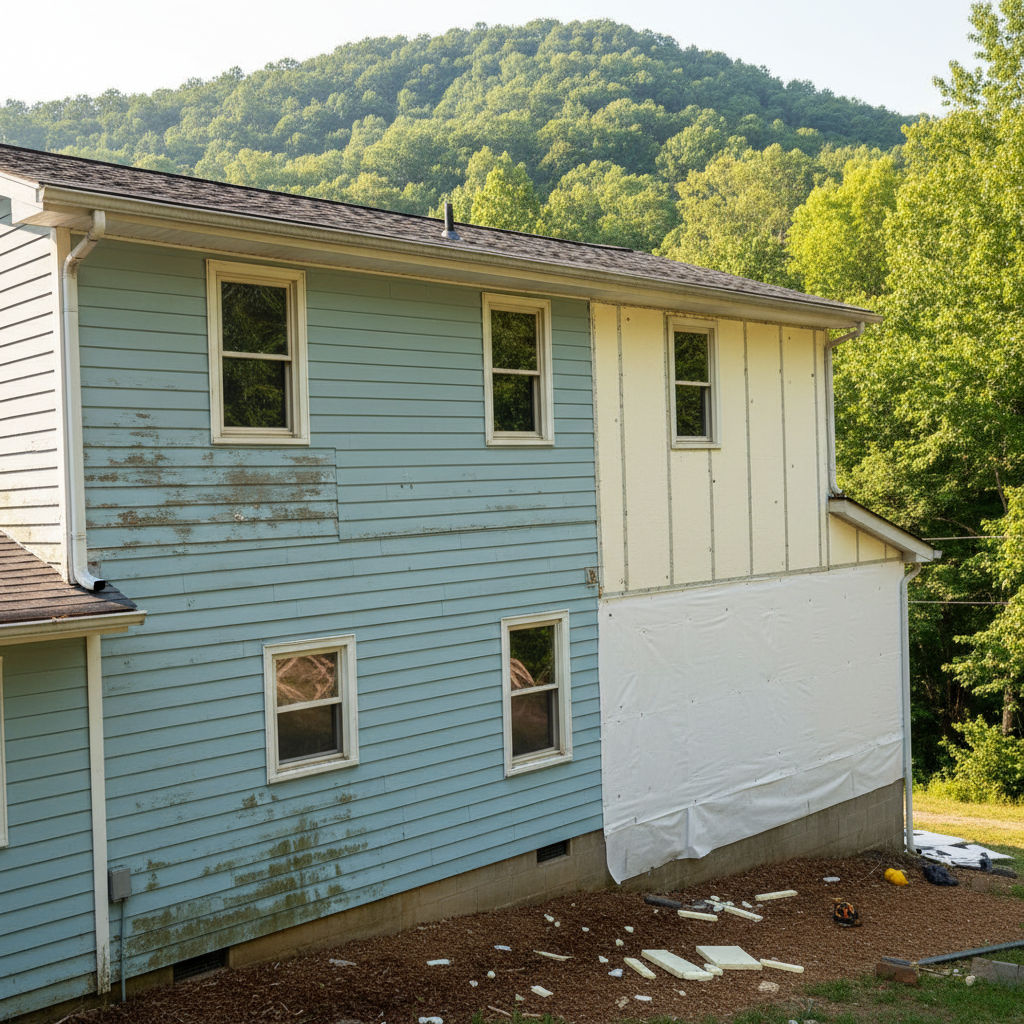
Are your energy bills creeping up every time the weather turns extreme around here? If you live anywhere from the rolling terrain near Douglas Lake up into the ridges of Sevierville, your home takes a beating from humid summers and legitimately chilly mountain winters. Choosing the right insulation installation approach is one of the best ways to fight back, but homeowners are usually stuck deciding between two main contenders: spray foam insulation and blown-in insulation.
Apex Siding sees what happens behind the drywall when Apex Siding pulls off old exterior materials or works on energy retrofits. Let us break down how these two insulation types actually stack up against each other in cost, durability, and day-to-day comfort.
The Breakdown on Blown-In Insulation
Blown-in insulation—usually made of loose-fill fiberglass or cellulose—has been around for many years. Contractors use a large blowing machine to fill attic floors and empty wall cavities.
- Cost: Blown-in insulation is significantly cheaper upfront, making it a favorite for budget-conscious attic upgrades in Sevierville, Tennessee.
- Durability: Cellulose can settle over time, and if blown-in insulation gets wet from a roof leak or heavy condensation, blown-in insulation loses its R-value and can pack down.
- Appearance & Application: Blown-in insulation is hidden away inside walls or blanketing your attic floor, so you will not see blown-in insulation, but blown-in insulation requires a well-sealed building envelope to work properly.
The Realities of Spray Foam Insulation
Spray foam insulation comes in open-cell and closed-cell varieties. Spray foam insulation expands on contact, sealing every tiny gap, crack, and crevice while providing high thermal resistance.
Which Option Fits Sevierville Weather Best?
Our local climate throws high summer humidity and freezing winter snaps your way. Blown-in insulation does a decent job slowing down heat transfer, but blown-in insulation lets air move right through it unless you spend extra time air-sealing every single penetration in your attic or wall cavities.
Spray foam insulation shines in our region because spray foam insulation stops moisture-laden air from moving into your living spaces. Sevierville humidity can wreak havoc on poorly sealed homes, leading to condensation and mold issues in tight spaces like crawl spaces and roof decks.
If you are building new or doing a major gut-renovation where budget allows, closed-cell spray foam insulation in the roof deck or exterior walls creates an airtight envelope that pays off in comfort. If you are simply topping off an attic floor in an existing home to meet modern energy standards, blown-in cellulose offers the best value for your money.
Weigh your upfront budget against long-term energy savings. Getting the right material installed correctly makes all the difference when the next mountain cold front rolls through Sevierville, Tennessee, and Apex Siding is here for all your insulation and siding needs.